“We either fight back or they will kill us.”
– Elon Musk
“You’re watching the collapse of the oldest political party in the world! Democratic Party goes all the way back to Thomas Jefferson… nobody who has common sense has the courage to stand up to people who are objectively crazy!“
– Newt Gingrich, former Speaker of the House
“America is not a government…America is your family, America’s your faith, your community, that’s America.”
– Marco Rubio, Secretary of State
“15 jurisdictions in AZ, MA, MI, MN, NH, and VA were sent monitors from
@TheJusticeDept for the upcoming primaries. Get to the polls—you never know who you’ll see from @CivilRights Division monitoring an election near you!”
– Harmet Dihlon, Assistant Attorney General – Civil Rights Division
“Democrats knew. 98% of the things we knew about Graham Platner before the Democrats voted in the primary in Maine. And they still voted for him!”
– Scott Jennings, CNN Commentator
“Fascism, Nazism, Communism and Socialism are only superficial variations of the same monstrous theme: collectivism.”
– Ayn Rand
“We in America have no interest in being polite & orderly caretakers of the West’s managed decline.” – Marco Rubio, Secretary of State
NATO Ankara Summit Was a Success: NATO’s 32 member countries announced major increases in their investment in defense spending, strategic partnerships with U.S. companies to produce and service weapon systems in Europe, and expansion of Europe’s military-industrial complex.
President Trump’s leadership has led to a significant shift in “burden sharing” as NATO’s European members and the EU jointly will spend over $1 Trillion dollars, coming close to matching the United States’ spending on mutual defense.
NATO will begin producing Abrams tanks, ATACMS missiles, and Stinger systems in Europe.
These initiatives, agreed to with the U.S. and major American defense firms including Boeing, Lockheed Martin, Raytheon, General Dynamics, and Anduril, will enable key weapons to be manufactured and serviced on the European continent.
Another important factor, in the final declaration signed by ALL leaders, reaffirms NATO’s collective defense commitment: one for all, all for one. The United States has again put its signature under NATO’s core security guarantee.
There will clearly need to be a transition period, as the U.S. has committed certain capabilities towards its NATO commitment that will take some time to replace locally, but the move towards a more equitable and partnership-based relationship is well on its way!
Maine – Graham Platner Fiasco: The irony is just dripping down Democrat’s jaws.
150,000 Democrat voters picked Graham Platner in the Maine Democrat primary.
A Nazi tattoo they could forgive… youthful indiscretion.
Roughing up his girlfriend? No problem—she’s a Republican.
Oyster “farmer” living off government benefits and his rich mommy and daddy while pretending to be working class? That’s just the profile of your average DSA member.
But then Platner committed the gravest of sins: He started to slip in the polls.
Now about 600 Maine Democrat delegates—party insiders—will pick his replacement, not voters. Just as Democrat insiders picked Kamala Harris to replace Biden, not voters.
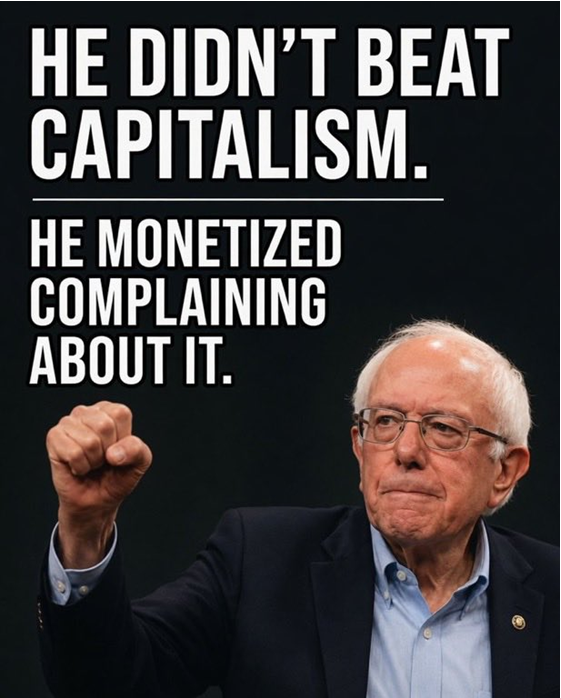
Just like Bernie… the Democrat establishment will push out the grassroots’ favorite… all for the sake of power?!? So much for saving democracy😊
Platner has ALL the cards… I hope he’s smart enough to play them well and make their establishment pay… millions if he’s smart!
Read more below and follow me on X & GETTR – @sanuzis
–Saul Anuzis
This Week: Trump Accounts go live, Ukraine gains momentum in war against Putin, and JD Vance continues fraud crackdown!
The Declaration at 250
Creedal nation, English offshoot, Christian country—28 thinkers debate America’s origin.
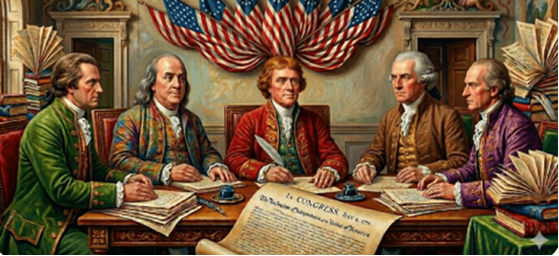
The Declaration of Independence is not something to be taken for granted. Even in rebellion, Americans might have chosen to remain in the British empire, seeking only concessions from king and parliament. Having decided upon independence, they could have issued a more perfunctory document to notify foreign powers that they could now open diplomatic relations with the American government and treat the conflict between Britain and America as an interstate war, not merely a British internal matter. The Declaration of Independence as we know it was not inevitable: The Committee of Five to whom the Continental Congress delegated the task of drafting the document could have chosen a penman other than Thomas Jefferson. And, of course, America might have lost the war, reducing the Declaration of Independence to a memento of treason.
Instead the Declaration is the introduction to all the world of a republic that has become the mightiest power on earth, a free republic on an unprecedented scale blessed with prosperity that was unimaginable in 1776. The course of every nation and people on earth has been changed by what the Declaration announced. Americans have good reason to look back to the origins of their independence to understand who they are and what has made them successful. They also look to it to understand the morality of the case for their cause, both in 1776 and today.
The Declaration and its significance have been much debated over the past 250 years—by Americans themselves and by foreigners, by laymen and experts, by conservatives, liberals, and radicals. Modern Age has been host to many of these debates, and for the semiquincentennial of America’s independence, we present now a symposium of twenty-eight responses from serious thinkers of many perspectives, but chiefly on the traditionalist right, to the questions, “How should we think about the Declaration of Independence today? What significance should it have for conservatives or liberals—or for Americans themselves as a people—in the twenty-first century?”
Deliberative Republicanism and the Triumph of the American Founding
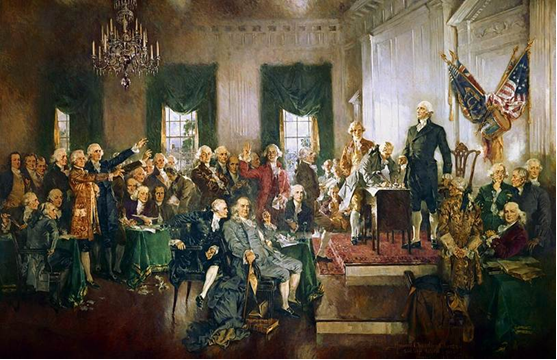
As Americans celebrate the 250th anniversary of our Republic’s birth, our attention naturally turns to the Declaration of Independence. The document flames with eloquence; its stunning phrases and stirring call to action are at the heart of our political tradition. American history cannot be understood apart from the principles it declared. Our greatest statesmen have always referred to the Declaration to summon the people back to the “better angels of our nature,” because its soaring poetry reminds us of who we really are.
Yet, the Declaration was by no means the end of the American Founding. After declaring independence, the Continental Congress still had a war to win—a task that required the toil and bloodshed of seven long, hard years. It took even longer to establish an effective form of government for the thirteen independent states. Despite these immense struggles, the Founders were committed to a principle they announced in the Declaration: “when a long train of abuses and usurpations, pursuing invariably the same Object evinces a design to reduce them under absolute Despotism, it is their right, it is their duty, to throw off such Government, and to provide new Guards for their future security.” In those “new guards” they provided us, we see the true meaning of republican liberty made manifest.
Among the most impressive, of course, is the First Amendment to the United States Constitution. Although the Bill of Rights was mostly a concession to opponents of ratification—a reassurance that the newly framed government would not become a consolidated tyranny—the protections it outlines have become among our most precious constitutional provisions. The amendment’s five freedoms (speech, religion, press, assembly, petition) do more, however, than simply carve out a space for individual liberty; they form the principal way we can participate in the life of our republic as citizens. That is to say, the First Amendment offers us the possibility of deliberation. Together, “we the people” have the right to shape the country’s future through discussion and debate. The independence we are celebrating this year—and the constitutional edifice built to defend it—means we have the right to define who we are for ourselves.
Citizenship Cannot Be a Souvenir

The Supreme Court’s decision in Trump v. Barbara is a grave mistake: it turns citizenship from membership in a nation into an accident of location at birth. The Court held that children born here to parents unlawfully or temporarily present are citizens at birth. But the majority read the 14th Amendment as if “subject to the jurisdiction thereof” meant mere presence, rather than complete political allegiance to the United States.
President Trump immediately announced that Congress must use its Article I power to amend immigration law, codifying that birthright citizenship belongs only to those born under America’s complete political jurisdiction—not to children of illegal aliens, whose families remain politically attached to another nation.
The majority’s error appears in its own language. It treats the decisive test as “American soil and subject to American law.” But that is not what the Constitution says. The 14th Amendment requires birth in the United States and being “subject to the jurisdiction” of the United States. Those words must mean more than obeying traffic laws, paying sales tax, or answering to a police officer while passing through. Illegal aliens may be subject to our territorial laws without becoming members of the American political community. Law governs strangers, but citizenship means something more and binds us together as a people.
Justice Thomas’s dissent gets the point. The Reconstruction Congress did not write the Citizenship Clause to constitutionalize birth tourism. It wrote it to overturn Dred Scott and secure citizenship for freedmen who were Americans in every meaningful sense and were born here, domiciled here, owing no allegiance to a foreign power. Thomas rightly emphasizes the older formula: “born and domiciled.” He also points to the original understanding of jurisdiction as “full and complete jurisdiction,” the same in extent and quality as the jurisdiction owed by citizens.
That is not the old feudal understanding of jus soli (citizenship by soil) but citizenship and membership in a people that is worthy of a republic.
Republicans can improve healthcare and lower costs

Medicaid’s structure incentivizes states and health insurance companies to enroll more patients; as a result, patients receive worse care, and taxpayers are forced to pay an ever-increasing bill.
Medicaid is already one of the largest taxpayer-funded expenditures, and it’s on track to keep growing. Spending on Medicaid is rapidly approaching $1 trillion annually. From 1973 to 2023, the total inflation-adjusted Medicaid spending per enrollee increased by 141 percent. Over that same period, government-sponsored health insurance grew from 29 percent to 49 percent of all health care spending, according to the Centers for Medicare and Medicaid Services. It is projected to reach 53 percent by 2033.
While recent reporting has exposed billions of dollars in fraudulent claims and duplicative payments, the problem runs much deeper than isolated incidents. Wasteful spending in Medicaid is systemic; it begins the moment people enroll in the program.
More than 78 percent of Medicaid beneficiaries — roughly 66 million Americans — are enrolled in managed-care plans run by private insurers. While most enrollees can choose their plan, a significant portion do not make an active selection and are instead assigned to one by the state through a process known as “auto-assignment.”
If auto-assignment rates remain at the current rate, states will auto-assign approximately 25 million more enrollees to Medicaid over the next ten years.
How young MAGA voters view America’s role in the world

From Ukraine to Iran to Taiwan, Trump supporters under 30 favor engagement over isolation.
Regular readers know that I have been debunking the myth of MAGA isolationism for a while, citing a series of polls from the Ronald Reagan Institute and others that have consistently shown MAGA Republicans are more hawkish and less isolationist than any other segment of the American electorate.
The isolationist right has dismissed those results as “Zombie Reaganism” — a dying “baby boomer supernova” driven by older Republicans with gauzy memories of a bygone era of 1980s GOP world leadership. Younger MAGA voters are far less supportive of bold U.S. leadership on the global stage, critics insist, and the future of MAGA is isolationist.
To see if that’s correct, the Reagan Institute decided to drill down on the foreign policy views of MAGA voters under 30. Well, the results are in — and the news is not good for the isolationist right. Young MAGA voters don’t want America to pull back from the world; they want to lead it.
A 72 percent supermajority of young MAGA voters believe the United States should be “more engaged and take the lead” on foreign policy, while just 19 percent say it should be “less engaged and react to events” — a 53-point spread in favor of U.S. global leadership. The institute surveyed more than 1,500 respondents nationwide in late May and early June, including a statistically significant sample of MAGA Republicans under 30.
Trump continues effort to fill federal bench with new judicial nominations
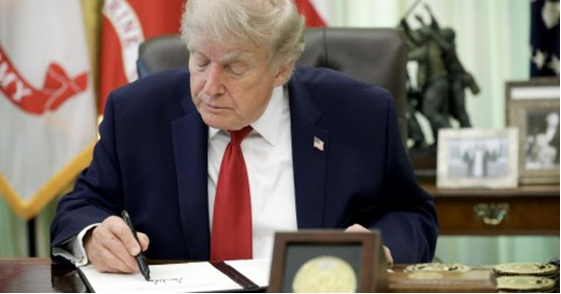
As of early July, the Senate has confirmed 45 of Trump’s Article III judicial nominees during his second term, bringing his total number of federal judicial appointments across both administrations to 279.
President Donald Trump is continuing efforts to expand his second-term imprint on the federal judiciary, announcing several new judicial nominees in recent weeks as the Senate presses ahead with confirmations.
On June 29, Trump announced two of his latest nominees: Greg Cook, nominated to serve as a judge on the U.S. District Court for the Northern District of Alabama, and Anna St. John, nominated to the U.S. Court of Appeals for the Fifth Circuit…
…As of early July, the Senate has confirmed 45 of Trump’s Article III judicial nominees during his second term, bringing his total number of federal judicial appointments across both administrations to 279.
The pace of new appointments has been moderated by the relatively small number of vacancies on the federal bench. As of Monday, there are 29 vacancies among roughly 870 authorized Article III judgeships, with 14 nominees awaiting Senate confirmation.
Game-changing events could reset the 2028 Republican ‘The Apprentice’ nomination
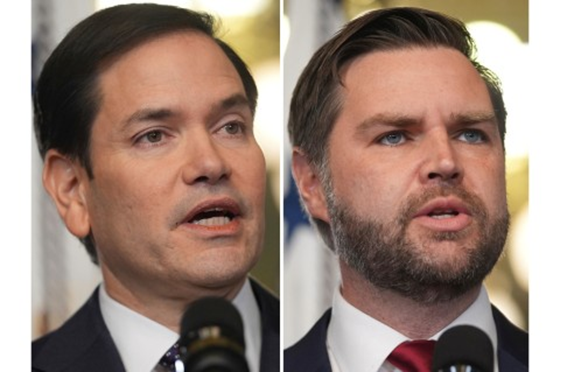
The official start of the 2028 presidential election cycle is just four months away. Yet the race for the Republican nomination already feels stale and boring with only two choices: Vice President JD Vance and Secretary of State Marco Rubio.
This week, insider reports say Trump is favoring Vance, though neither is very popular.
Last month, two national polls showed Vance leading Rubio, 42 percent to 15 percent, among Republican primary voters. An end-of-June poll found Vance at 35.4 percent, compared with Rubio’s 16.5 percent. No other prospective primary candidates reached double digits.
Equally revealing was a mid-June Navigator Research study asking registered voters about “favorability.” Vance earned 52 percent unfavorable, compared to Rubio’s 40 percent. Although Trump stood at 58 percent unfavorable, given his dominance over the Republican Party and the MAGA voter base, expect the president to play a leading role in determining the unlucky winner of the first post-Trump-era GOP nomination.
US nuclear power in state energy planning: A policy roadmap

The United States is experiencing a nuclear energy renaissance, driven by surging electricity demand from artificial intelligence, data centers, electrification, and advanced manufacturing. Nuclear power—already providing 19 percent of US electricity and 55 percent of its carbon‑free generation with ninety-four reactors in twenty-eight states—remains the nation’s most reliable source of firm, clean power at scale.
The United States has accelerated efforts toward new nuclear deployment and expanding the nuclear supply chain capacity even further. Yet states cannot rely solely on these actions to enable this expansion. As electricity demand grows, states must proactively shape the policy, economic, and regulatory environment necessary to build new nuclear reactors and their supply chains.
States have started this process with different approaches. In 2025, forty-five states introduced more than 350 nuclear‑related bills and enacted sixty, following a comparable record from the previous year across forty-three states. These legislative initiatives have focused on enabling financial incentives, cost recovery, generation/off-taker co-location, feasibility studies, and the classification of nuclear as a clean energy priority. However, these measures will remain merely symbolic if states don’t appropriate funding to bring them to fruition.
Europe should take the long bet on the US and the transatlantic security relationship
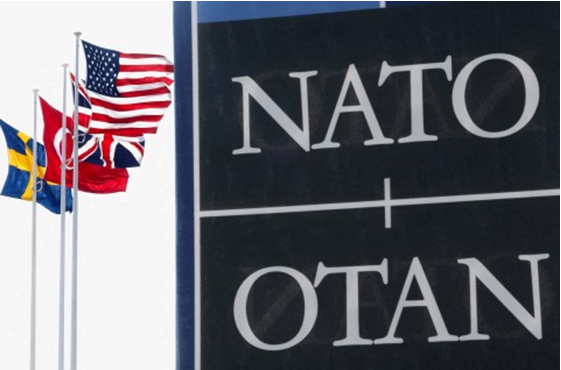
With its “NATO 3.0” approach, the Trump administration wants to shift more responsibility for Europe’s defense to European allies and reduce the US military presence in Europe and its commitments to NATO war plans.
At the upcoming Ankara summit, European allies should underscore their increased defense spending and their tangible contributions to shared security.
Despite current tensions and concerns about the Alliance, US public and congressional support for NATO remains strong.
So far, this year has been difficult for transatlantic unity. In January, US President Donald Trump threatened to seize Greenland, an autonomous territory of NATO ally Denmark, prompting a genuine crisis in the Alliance. In March and June, the US president sharply criticized Europeans for what he perceived as equivocation when asked to support Operation Epic Fury against Iran. He called NATO a “paper tiger,” and singled out allied leaders for personal insults. In May, he announced the withdrawal of 5,000 troops from Germany and cancellation of plans to deploy a deep precision strike battalion to the country. As the July 7-8 NATO Summit in Ankara approaches, many European allies fear that the second half of the year will bring more of the same.
Whether NATO emerges from Ankara stronger or more unstable could hinge on what happens with “NATO 3.0.” Introduced in February, NATO 3.0 is the Trump administration’s vision for a new era for the Alliance. It is defined by reduced US force commitments to European security and increased European military capability. In effect, it calls for a conventional transatlantic defense of Europe led by European allies and backed by a US nuclear deterrent.
The Trump administration wants to show that it is serious about NATO 3.0. Recent weeks have seen a steady stream of official announcements and leaked reports of meaningful and imminent reductions in US military assets in Europe. Reports have emerged of White House plans to decrease troop deployments, remove critical and difficult-to-replace US capabilities from Europe, relinquish senior allied positions to Europeans, and downgrade or curtail US participation in key Alliance meetings.
What Does NATO Defense Spending Look Like Heading into the Ankara Summit?
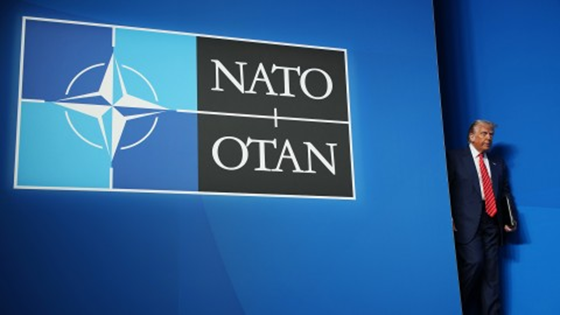
Defense spending will continue to be a major topic in discussions at the 2026 NATO Summit in Ankara, Turkey, from July 7 to 8. The 2025 summit in The Hague concluded with a commitment by allies to spend 3.5 percent of GDP on defense investments by 2035 and an additional 1.5 percent of GDP on “broader defence- and security-related areas,” an update on the 2014 Wales Summit agreement for allies to aim to spend 2 percent of GDP on defense. Below are five questions on NATO defense spending levels ahead of this week’s Ankara Summit.
Rutte’s ‘Made in NATO’ weapons push collides with EU’s ‘Buy European’ drive
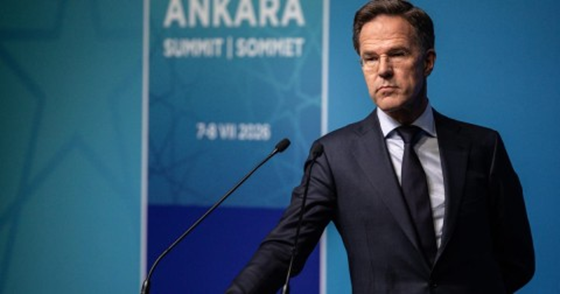
The NATO chief wants to build the transatlantic military industrial complex, but the EU is backing its own companies.
NATO chief Mark Rutte announced tens of billions of dollars in new defense deals Tuesday, hailing a new age of transatlantic industrial cooperation. There’s just one catch: the EU is set on fostering its own homegrown industries.
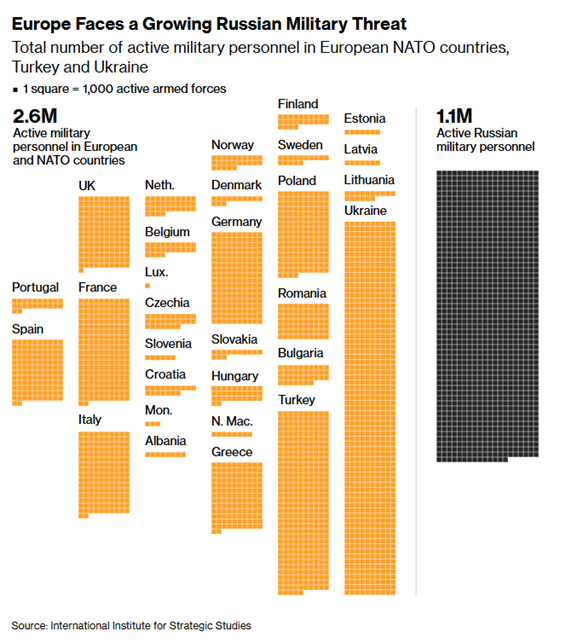
At the heart of the dispute is how to spend the flood of defense money Europe is pouring into rearmament as it races to deter Russia and also fulfills Donald Trump’s pressure for the continent to do more to defend itself.
“The world will see industries from North America and Europe working hand-in-hand, innovating together, and developing next-generation capabilities,” Rutte said Tuesday, as he announced over $54 billion in new defense deals, including billions in transatlantic coproduction schemes.
NATO’s new Arctic presence shows that European allies are stepping up

This year’s NATO Summit takes place at a critical time for the Alliance. Political churn across the Atlantic is high, magnified by the recent US conflict with Iran, a country that shares a border with summit-host Turkey, and by US President Donald Trump’s frustrations that European allies did not do enough to back the US campaign in the region. This is the latest flashpoint in a broader pattern of transatlantic friction that includes territorial provocations over Greenland and public spats with European leaders such as German Chancellor Friedrich Merz. All of it threatens to overshadow a gathering that should, by the numbers, be a moment to show genuine progress.
With no marquee deliverable like last year’s 5 percent defense spending target for the Alliance to boast, NATO leadership will point to progress from European allies on three key issues: defense spending, defense industrial production, and aid to Ukraine.
Expect the message from NATO Secretary General Mark Rutte to be that European allies are stepping up in meaningful ways. By almost every quantitative measure, Europe is doing more now than ever before.
The CCP Hates America Because We Helped Create Modern China

The prevailing narrative portrays the United States and China as inevitable rivals locked in a struggle for global supremacy, but history tells a different story.
For most of the past two centuries, no foreign nation contributed more to China’s modernization than the United States. Unlike the European colonial empires or Imperial Japan, America never sought to partition China, seize its territory or reduce it to a colony. Instead, America shaped modern China through education, science, medicine, commerce, diplomacy and the example of constitutional government.
Ironically, those very contributions explain why today’s Chinese Communist Party regards the United States not merely as a geopolitical rival but as its greatest ideological enemy.
America’s favorable disposition toward China has deep roots. During the 18th-century Enlightenment, thinkers such as Voltaire admired China’s meritocratic bureaucracy and sophisticated civilization.
That admiration crossed the Atlantic and influenced educated Americans. Born of its own anti-colonial revolution, the United States generally viewed China not as a land to conquer but as an ancient civilization worthy of respect and friendship.
This spirit distinguished American policy from that of the European empires. While Britain built its China trade on opium, culminating in the Opium Wars, the U.S. never sponsored a narcotics trade against China.
The new arms race is intra-European
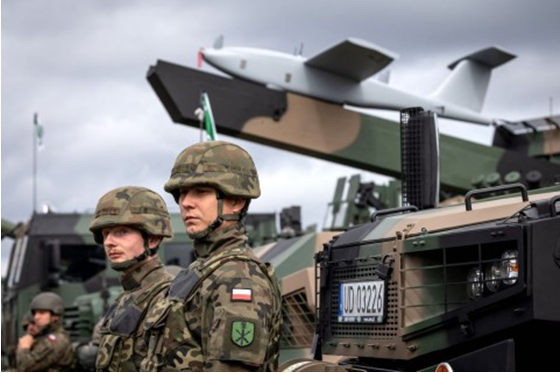
I think I’ve finally figured out why the leaders of Europe are so upset at the United States. The never-ending outpouring of rage from European and British elites, directed at the US and the Trump administration, makes sense to me at long last.
It’s not because the Europeans are worried about having to spend money on defence against Russia; their combined economic might is ten times that of Russia. Spending on their militaries may accelerate economic problems in a few places, but in many it will be net positive. It’s not like Europe opposes government-funded social programmes, either, which is what most of their militaries are. They’re certainly not war-fighting organisations – not outside of the frontier states. If Europe actually went to war, the militaries of its nations would need to be entirely rebuilt.
It’s not America’s threats to Greenland that are upsetting the Europeans. And it’s not that they believed in an American nuclear shield, especially since the end of the Cold War. Unless they were actually idiots. Which they aren’t. What American president would be willing to risk a nuclear strike on an American city in order to respond to a nuclear attack in Europe? Not likely, outside the context of the Cold War. And maybe not even then.
No, the thing the nations of Europe are desperately worried and angry about is each other. For all of history – up to the point where the United States stopped it – the truly important problems in Europe were solved through violent coercion. War. Genocide. Population transfers. Terrible things.
Final Thoughts